Sometimes. And sometimes you pay more. That surprises most people.
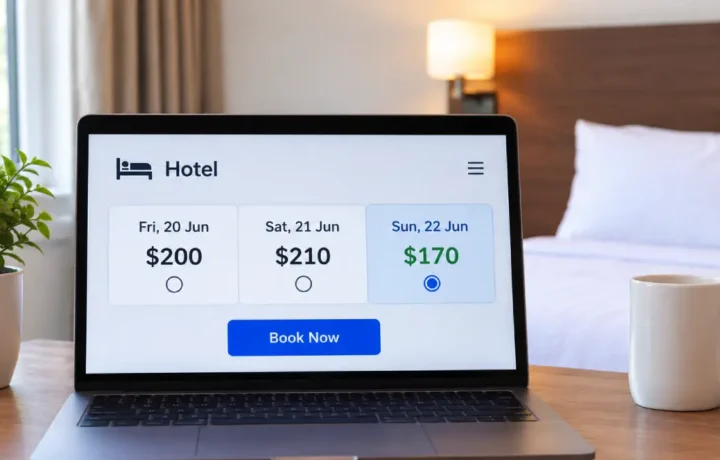
Are hotels cheaper if you stay longer? At hotels built for long stays, and with special “stay longer” rates, yes, the nightly price usually drops. At ordinary hotels booked through the normal rate, research from the University of Delaware found the opposite: a longer stay often comes with a higher average nightly rate. So the honest answer depends on which hotel you book and which rate you pick.
Here’s how it works, where the real savings are, and what I’d do before booking a week or more. Prices and terms below were checked in November 2026. Always confirm with the hotel before you pay.
Are hotels cheaper if you stay longer? The short answer
Hotels don’t price rooms like a wholesale shop. Each night is priced on its own, based on demand for that date. If your stay crosses a busy Friday or a big event, your total goes up, however many nights you book.
In 2017, researchers at the University of Delaware published a study in Cornell Hospitality Quarterly. They found that, on average, hotels charge more per night when guests stay longer. A follow-up survey of 600 people showed that most travellers expect the opposite, and only a small number know about this practice.
So “book longer, pay less” only works if you choose it on purpose. You get the discount by choosing the right rate, the right type of hotel, or by asking.
If you’ve read my guide on whether hotels get more expensive closer to the booking date, this will feel familiar. Timing and rate type matter more than length alone.
Why a longer stay can cost more per night
The Delaware researchers gave a few possible reasons. Mostly, it comes down to how hotels manage risk.
- Last-minute discounts on slow nights. A one-night guest might catch a quiet Tuesday at a low price. A seven-night booking locks in a mix of cheap and expensive nights.
- Early check-outs. Some guests book long and leave early, so the hotel prices that risk in.
- Less spending on site. The study noted that long-stay guests tend to spend less in the hotel’s restaurants.
The mix of nights is the big one. A Monday-to-Monday stay always includes a weekend. In holiday towns, weekends cost more. I explain that pattern in are hotels more expensive on weekends, and it’s worth checking before you pick your dates.
Where longer stays really are cheaper
Now the good news. There are four places where staying longer reliably lowers the price.
1. Hotel chain “stay longer” rates
Big chains publish special rates for longer bookings. They’re real discounts, with conditions.
Hilton’s Stay Longer & Save terms, for participating hotels in Europe, the Middle East and Africa, need at least three consecutive nights and a seven-day advance booking. The discount is up to 20% for Hilton Honors members and up to 15% on public rates. The catch? The deposit is fully prepaid and non-refundable, and leaving early means losing the discounted rate.
Marriott also runs a “Save on 5+ Nights” offer for stays between November 2026 and June 2027. The page I checked didn’t show a fixed percentage, so look at the price on your own dates.
2. Extended-stay hotels with weekly rates
Extended-stay brands are built for guests staying a week or more. Rooms usually have a kitchenette, and the weekly rate bundles seven nights into one lower price.
WoodSpring Suites, one of these brands, says on its own site that the difference is typically about 20 to 30% compared with booking the same nights one by one. Treat that as a rough guide. Rates change by city and season.
If you’re travelling with family, the kitchen matters as much as the room price. Cooking breakfast and a simple dinner most days saves more than any discount code. As someone who cares about eating well on the road, I’d pick a kitchenette over a fancy lobby for any stay longer than four nights.
3. Holiday rentals with weekly and monthly discounts
Airbnb lets hosts set discounts for longer bookings. Its help page on weekly and monthly discounts says a weekly discount applies to stays of 7 or more nights and a monthly discount to 28 or more nights. In some cases Airbnb also adds its own monthly stay savings for 28+ nights.
Not every host offers a discount, though. Compare a 6-night and a 7-night search for the same place. Sometimes the extra night costs almost nothing.
4. Tax breaks for very long stays
This one is little known. In some places, hotel tax stops after you’ve stayed long enough.
In Texas, for example, the state Comptroller says that guests who stay at least 30 consecutive days are exempt from state hotel occupancy tax. If you tell the hotel in writing before you check in, you’re exempt from day one. If you don’t, you pay tax for the first 30 days and nothing after that. Any break in the stay cancels the exemption. Rules differ by state and country, so ask the front desk where you’re going.
Quick comparison: which option saves the most?
| Option | Usual minimum stay | Typical saving (checked Nov 2026) | Main catch |
|---|---|---|---|
| Standard hotel rate | None | Often none; can cost more per night | Weekend and event nights push up the total |
| Hilton Stay Longer & Save (EMEA) | 3 nights, booked 7 days ahead | Up to 15% public, up to 20% members | Prepaid, non-refundable |
| Marriott Save on 5+ Nights | 5 nights | Varies by hotel | Not every hotel takes part |
| Extended-stay weekly rate | About 7 nights | Roughly 20 to 30% (brand’s own estimate) | Fewer extras like pools or restaurants |
| Airbnb weekly/monthly discount | 7 or 28 nights | Set by each host | Cleaning fees and house rules |
| Hotel tax exemption (e.g. Texas) | 30 consecutive days | No state hotel tax after day 30 | Any break resets it |
Myth vs reality
Myth: Booking a week always gets you a better nightly price.
Reality: Only on long-stay rates or at extended-stay properties. The normal rate can be higher per night.
Myth: The biggest discount is always the best deal.
Reality: A 20% prepaid rate isn’t cheap if your plans change and you lose the whole deposit.
Myth: Hotels won’t change the price if you ask.
Reality: The Delaware researchers’ own advice was to call reservations and ask. Some hotels respond.
Here’s what I’d do before booking a long stay
Let me save you some money with a simple routine. It takes about 15 minutes.
- Price one night on its own, then price your full stay. Divide the total by the number of nights and compare.
- Try shifting your dates by a day or two. Moving check-in from Friday to Sunday can drop the total a lot.
- Look for a “stay longer,” “extended stay” or “weekly” rate on the hotel’s own website.
- Call the hotel directly. Ask if they have a long-stay rate that isn’t online.
- Add every fee before you compare. Resort fees, cleaning fees and taxes change the winner more often than you’d think.
Lija’s tip: Ask about the early check-out policy before you book a discounted long stay. If leaving early means paying for every night, a slightly pricier flexible rate is the safer pick.
Fees are the part people forget. In Las Vegas, for example, most big Strip resorts add a nightly resort fee, so a long stay multiplies it. My list of Las Vegas hotels with no resort fees shows where that cost disappears, and my guide to the best hotel deals on the Las Vegas Strip covers midweek pricing.
Before you go: practical and safety notes
Long stays feel different from a weekend trip. A few small checks make them easier.
Read the cancellation terms twice. Prepaid long-stay rates usually can’t be refunded if your plans change. Keep a screenshot of the rate and the terms on the day you book.
Ask about housekeeping. Many extended-stay hotels clean just once a week. That’s fine for most people. Just know it in advance.
For safety, pick a room above the ground floor if you can, and use the door’s secondary lock every night. If you’ll be out all day for a week, keep passports and spare cash in the room safe.
Choosing between a hotel and a cheaper roadside option for a long trip? My explainer on the difference between a hotel and a motel helps you weigh safety, space and price.
FAQs
Do hotels give discounts for long stays?
Many do, but usually through a special rate. Hilton, Marriott and extended-stay brands all advertise long-stay offers. The standard rate on the same hotel may not drop at all. Check the hotel’s own website for a “stay longer” or weekly rate.
Is it cheaper to book a hotel for a week or night by night?
At extended-stay hotels, a weekly rate is usually cheaper than seven separate nights. At regular hotels, it depends on the dates. Price both ways and compare the nightly average. Include taxes and fees in both totals.
How many nights count as a long stay at a hotel?
It varies by offer. Hilton’s EMEA long-stay rate starts at three nights, Marriott’s offer at five, and weekly rates at around seven. Airbnb uses 7 nights for weekly and 28 nights for monthly discounts.
Can you negotiate a hotel rate for a long stay?
Yes, it’s worth trying. Call the hotel directly instead of the central booking line. Say how many nights you need and ask for their best long-stay rate. If they won’t move, compare other hotels nearby.
Do you pay hotel tax on a 30-day stay?
In some places, no. Texas exempts guests who stay at least 30 consecutive days from state hotel occupancy tax. Other states and countries have different rules. Ask the hotel before check-in, because some need written notice.
Planning a long stay somewhere and not sure which rate to pick? Ask me in the comments and I’ll help you think it through.
Share this article:

Meet Lija Parveen
Travel and food blogger, writer and fact-checker. I focus on researched destination information, practical travel advice and local food stories.