The best cities to visit in India for a first trip are Delhi, Agra, Jaipur, Udaipur, Varanasi and Amritsar. Add Jaisalmer if you want desert, or Darjeeling if you’d rather have cool hills and tea gardens. Most of them are at their best between October and March.
That’s the short answer. The longer one depends on your number of days, the heat you can handle, and who’s coming with you. I’ve kept this list to cities, not regions or beaches. For those, my bigger guide to the best places to visit in India covers Goa, Kerala, Ladakh and more.
Prices below were checked in November 2026. Ticket rules in India change often, so please confirm on the official site before you go.
Quick list: best cities to visit in India and what each is for
| City | Best for | Best time | Days I’d give it |
|---|---|---|---|
| Delhi | History, markets, food | October to March | 2 |
| Agra | The Taj Mahal | September to November, February to April | 1 |
| Jaipur | Forts, palaces, shopping | Cooler months; avoid peak summer | 2 to 3 |
| Udaipur | Lakes and a slower pace | September to March | 2 to 3 |
| Varanasi | Ghats, river rituals | Late autumn to winter | 2 |
| Amritsar | The Golden Temple, Punjabi food | Cooler months; avoid peak summer | 1 to 2 |
| Jaisalmer | Desert fort, dunes | October to March | 2 |
| Darjeeling | Cool hills, tea | Autumn and spring | 2 to 3 |
The best-time windows for Delhi, Agra, Varanasi, Jaisalmer and Darjeeling come from Lonely Planet’s India guide. Udaipur’s comes from Incredible India, the government tourism site.
1. Delhi: the easy starting point
Most international flights land here. So Delhi is usually where your trip starts anyway.
It’s big, loud and busy. It also has centuries of history packed into one city, from Mughal monuments to the lanes of Old Delhi, where the street food is a reason to visit on its own. Two days is enough for a first look.
Pros: great connections by air and train, huge food choice, lots of hotels at every price. Cons: winter air pollution can be bad, traffic is slow, and touts around the main stations are persistent.
If you care about healthy eating while travelling (I do), Delhi is actually easy. Lentils, roti, sabzi and fresh fruit are everywhere. Just pick busy stalls where food is cooked hot in front of you.
2. Agra: one day, one reason
People come to Agra for the Taj Mahal. Honestly, that’s fine. One full day, or an overnight stay so you can be at the gate for sunrise, is the right amount.
According to the official Taj Mahal visitor page, it opens 30 minutes before sunrise, closes 30 minutes before sunset, and is closed on Fridays. Tickets are sold online only.
| Visitor | Entry ticket | Main mausoleum (optional) |
|---|---|---|
| Indian citizens and OCI | Rs 50 | + Rs 200 |
| SAARC and BIMSTEC citizens | Rs 540 | + Rs 200 |
| Other foreign visitors | Rs 1,100 | + Rs 200 |
| Children under 15 | Free | – |
(Checked November 2026 on tajmahal.gov.in. Confirm before booking.)
Lija’s tip: never plan Agra for a Friday. It sounds obvious, but it’s the most common mistake I see in Golden Triangle plans.
If you want a splurge stay with a Taj view, I’ve written about the Oberoi Amarvilas in Agra. For most people, though, a mid-range hotel and an early alarm work just as well.
3. Jaipur: forts, colour and good shopping
Jaipur is the third point of the Golden Triangle with Delhi and Agra, and it’s my favourite of the three for a family. The sights are spread out but easy to reach by cab.
Amber (Amer) Fort was built by Maharaja Man Singh I in 1592 and sits about 11 km from central Jaipur. Incredible India lists its hours as 9:00 am to 6:00 pm, with an English light show at 7:30 pm.
Fees went up on 1 January 2026. As Pink City Post reported, Amber Fort is now Rs 200 for Indians and Rs 1,000 for foreigners. Hawa Mahal is Rs 100 and Rs 600. A 10-day combined pass for state-run monuments costs Rs 1,300 for Indians and Rs 5,500 for foreigners (checked November 2026).
Worth it? Only if you’ll see four or more paid sites. For a two-day trip, single tickets are usually cheaper.
Pros: lots to see, good hotels, great block-print and textile shopping. Cons: crowds at Amber Fort by late morning, and shop “guides” who earn commission. Go to the fort early.
4. Udaipur: the calm city
If Jaipur wears you out, Udaipur is the reset. It’s known as the City of Lakes and was founded by Maharana Udai Singh II in 1553, according to Incredible India’s Udaipur page.
The City Palace looks over Lake Pichola. Jag Mandir sits on an island in the same lake, and Fateh Sagar Lake is good for an easy evening walk. Kumbhalgarh Fort is about 85 km away if you want a day trip.
Udaipur is also where the famous Taj Lake Palace hotel floats on Pichola. Lovely, but very expensive. Plenty of lake-view guesthouses in the old city give you the same sunset for far less.
Pros: walkable old town, slower pace, gentle for older parents. Cons: lanes near the palace are steep and narrow, and lake levels can drop in a dry year.
5. Varanasi: intense, and unforgettable
Varanasi isn’t for everyone. It’s crowded, it’s spiritual in a very open way, and cremations happen in public on the ghats. Some people love it. Some leave after a day.
I’d still go. The evening Ganga aarti at Dashashwamedh Ghat is the main event. Incredible India describes it as a ceremony at dusk that lasts about 45 minutes. In winter it starts around 6:00 pm, as reported by Amar Ujala in November 2025, so arrive 30 to 45 minutes early for a spot.
A sunrise boat ride on the river is the other thing I’d book. Agree the price before you step in.
Pros: nothing else in India feels like it. Cons: very crowded lanes, aggressive boat and “guide” offers, and photos at the burning ghats are not welcome. Please don’t take them.
6. Amritsar: the Golden Temple and great food
Amritsar is small and easy. The Golden Temple (Harmandir Sahib) is free to enter, and the community kitchen (langar) serves a free meal to everyone every day.
You’ll need to cover your head and remove your shoes before entering. Shoe stands are free. Carry a scarf so you don’t have to buy one outside.
Pros: welcoming, affordable, excellent Punjabi food. Cons: winter mornings are foggy and cold, which can delay trains and flights.
7. Jaisalmer: the desert city
Jaisalmer is far west in Rajasthan, close to the Thar Desert. The golden sandstone fort is still lived in, which makes it feel different from the museum forts elsewhere.
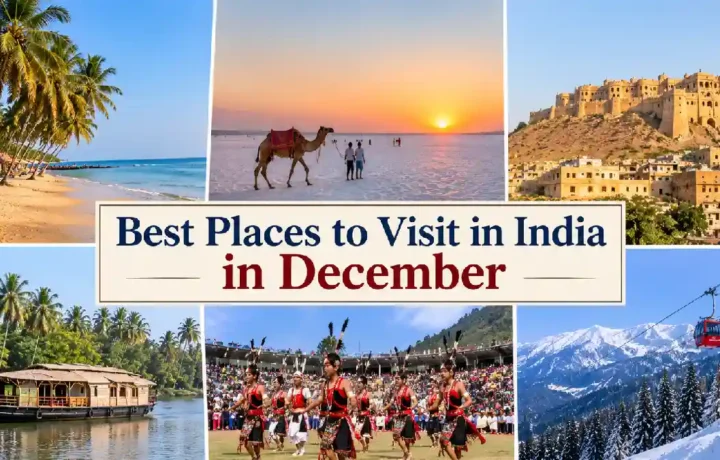
Go between October and March. Summer heat here is serious. My December guide to places to visit in India in December has more on desert camps and winter nights, which get properly cold.
Pros: dunes, starry skies, a unique fort. Cons: it’s a long trip from anywhere, and desert camp quality varies a lot. Read recent reviews closely.
8. Darjeeling: when you need cool air
Every list of Indian cities leans north and west. Darjeeling is my pick for the east, and for anyone who finds the plains too hot.
Tea gardens, mountain views and the toy train are the classics. Autumn and spring give the clearest skies. For quieter spots, here are unusual things to do in Darjeeling.
Pros: cool weather, beautiful views, good walking. Cons: roads up are slow and winding, which is hard if you get car sick. Monsoon brings landslides.
How I’d choose between them
Here’s what I’d do with one week: Delhi, Agra and Jaipur. That’s the Golden Triangle, and the roads and trains between them are well used by visitors.
With 10 to 12 days, add Udaipur. With two weeks, add Varanasi or Amritsar by train or flight. Don’t try to see all eight in one trip. You’ll spend more time in transit than in the cities.
If you’re travelling with family, pick fewer cities and stay longer in each. Kids and older parents get tired of packing every second day. In Jaipur, a heritage palace hotel like Rambagh Palace can make a short stay feel special, but a simple hotel with a pool works just as well for children.
Before you go: safety and practical tips
- Use registered app cabs or prepaid taxi booths at airports and stations, and ignore people who say your hotel is “closed”.
- Drink sealed bottled or filtered water. Fresh-cooked hot food is usually safer than pre-cut fruit or salads.
- Dress modestly at temples. Shoulders and knees covered is a good rule for everyone.
- Book trains early in peak season (December and January). Popular routes fill up.
- Keep a scarf handy. It helps with dust, sun, and head covering at gurdwaras and some temples.
Myth vs reality: people often say India is “too much” for a first trip. In my view the Golden Triangle is the gentle way in. Hotels, drivers and guides there deal with first-time visitors every day, so you’ll find your feet quickly.
FAQs
Which is the best city to visit in India for the first time?
Jaipur is my pick for a first trip. It has major sights, good hotels and a manageable size. It’s also only a few hours from Delhi and Agra, so it fits easily into a short itinerary.
What is the best month to visit cities in India?
For most of the cities on this list, October to March is best. Lonely Planet recommends that window for Delhi, Jaisalmer and the Rann of Kutch, and Incredible India suggests September to March for Udaipur. Darjeeling is the exception, with autumn and spring the clearest seasons.
Is the Taj Mahal open every day?
No. The Taj Mahal is closed on Fridays for general viewing. On other days it opens 30 minutes before sunrise and closes 30 minutes before sunset, according to the official Taj Mahal website.
How many days do you need for the Golden Triangle?
Five to seven days is comfortable for Delhi, Agra and Jaipur. That gives two days in Delhi, one in Agra and two or three in Jaipur. Less than that is possible but rushed.
Is Varanasi safe for tourists?
Varanasi is generally safe, but it’s crowded and touts are common. Agree boat prices before boarding, watch your bag in the lanes and on the ghats, and don’t photograph cremations. Women travelling alone should avoid empty ghats late at night.
Planning one of these cities and stuck on something? Ask me in the comments and I’ll help where I can.
Share this article:
Meet Lija Parveen
Travel and food blogger, writer and fact-checker. I focus on researched destination information, practical travel advice and local food stories.