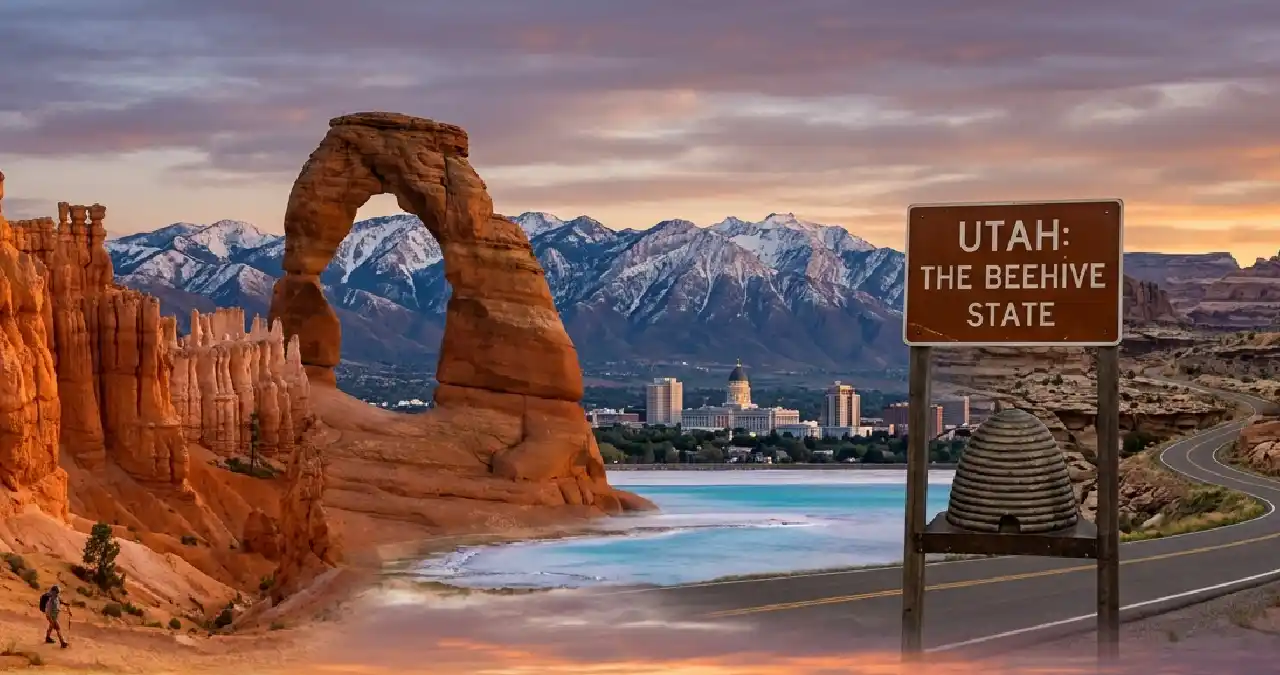
Utah is one of the most visually diverse states in the United States. Known as the Beehive State, Utah is famous for its dramatic red-rock landscapes, spectacular national parks, mountain scenery, skiing, outdoor adventures, distinctive food, and rich history.
So, what is Utah known for? The answer goes far beyond its famous national parks. Utah combines desert landscapes in the south with alpine mountains in the north, while cities such as Salt Lake City offer cultural attractions, entertainment, sports, and a growing technology sector.
Whether you enjoy hiking through canyons, skiing in the mountains, exploring historic sites, photographing unusual rock formations, or trying local food, Utah offers plenty to discover.
What Is Utah Known For?
Utah is best known for:
- The Mighty 5 national parks
- Red-rock canyons and dramatic desert landscapes
- The Wasatch Mountains and ski resorts
- The Great Salt Lake
- The Beehive State nickname and pioneer history
- Salt Lake City and its cultural attractions
- Unique local foods such as fry sauce and funeral potatoes
- Outdoor activities including hiking, camping, climbing, and skiing
- Scenic destinations such as Bonneville Salt Flats and Monument Valley
- Film, arts, and independent cinema
- Professional sports and a growing technology economy
Let’s explore what makes Utah so distinctive.
Utah’s Diverse Climate and Landscapes
One of the most interesting things about Utah is its geographical diversity.
Northern Utah is home to the Wasatch Mountains, where winter brings snow and attracts skiers and snowboarders. Southern Utah, meanwhile, is known for its dry climate, sandstone cliffs, canyons, mesas, arches, and other striking desert formations.
The state experiences four distinct seasons. Summer can be ideal for exploring mountain areas and higher-elevation destinations, while spring and autumn are popular for hiking and sightseeing in many parts of southern Utah. Winter transforms the mountain regions into major destinations for snow sports.
Because of these geographical differences, Utah can offer very different travel experiences within the same state.
Utah Is Famous for Outdoor Adventures
If you love spending time outdoors, Utah is one of the most rewarding states to explore.
Visitors can go hiking, camping, rock climbing, mountain biking, scenic driving, wildlife watching, and photography. During winter, the mountains around the Wasatch Front become popular destinations for skiing and snowboarding.
Utah’s outdoor appeal comes from its variety. You can spend one day walking through a red-rock canyon and another exploring a snowy mountain landscape.
The state is also home to numerous state parks, national monuments, wilderness areas, and other public lands.
Utah’s Spectacular Natural Beauty
Utah’s landscapes are among its biggest attractions. From enormous salt flats to towering sandstone cliffs, the state is filled with places that look dramatically different from one another.
Bonneville Salt Flats
The Bonneville Salt Flats are one of Utah’s most unusual natural landscapes.
Located in northwestern Utah, this enormous expanse of salt crust is a remnant of ancient Lake Bonneville. The exceptionally flat surface has also become famous for land-speed racing.
The landscape can look almost otherworldly, particularly when the surface reflects the sky. Visitors often stop here to photograph the horizon and experience one of the most distinctive landscapes in the American West.
The Wasatch Front
The Wasatch Front is the urbanized region along the western side of the Wasatch Range. It includes communities such as Salt Lake City, Ogden, Provo, Orem, Layton, and Bountiful.
The area combines city life with easy access to mountains and outdoor recreation. Visitors can enjoy museums, restaurants, entertainment, and cultural attractions before heading into the mountains for hiking, skiing, or scenic drives.
The Great Salt Lake
The Great Salt Lake is another defining feature of Utah.
It is the largest saltwater lake in the Western Hemisphere and is an important habitat for birds and other wildlife. Its distinctive landscape and changing water levels make it one of the state’s most recognizable natural attractions.
Utah’s Mighty 5 National Parks
Utah is especially famous for its five national parks, often called the Mighty 5:
- Arches National Park
- Bryce Canyon National Park
- Canyonlands National Park
- Capitol Reef National Park
- Zion National Park
Each park has its own landscape and character.
Arches National Park
Located near Moab, Arches National Park contains more than 2,000 natural stone arches along with sandstone fins, pinnacles, balanced rocks, and dramatic desert scenery.
Popular sights include Delicate Arch, Landscape Arch, and Balanced Rock.
Hiking, photography, scenic driving, and stargazing are among the popular activities.
Bryce Canyon National Park
Bryce Canyon is famous for its distinctive hoodoos, tall, irregular columns of rock formed by erosion.
The combination of orange, red, and white rock formations creates one of Utah’s most recognizable landscapes. Sunrise and sunset can be particularly impressive as changing light emphasizes the shapes and colors of the canyon.
Canyonlands National Park
Canyonlands offers enormous desert views, deep canyons, mesas, and rugged terrain.
The park is divided into several districts, including Island in the Sky, The Needles, The Maze, and the rivers that flow through the park.
Its vast scale makes it an excellent destination for travelers looking for dramatic scenery and a more remote outdoor experience.
Capitol Reef National Park
Capitol Reef is known for its layered sandstone landscape, cliffs, domes, canyons, and the Waterpocket Fold.
The park offers hiking, scenic drives, camping, photography, and opportunities to explore the area’s geological and cultural history.
Zion National Park
Zion is one of Utah’s most famous destinations and is located in southwestern Utah near Springdale.
The park is known for towering sandstone cliffs, narrow canyons, and the Virgin River. Popular hiking experiences include The Narrows and Angels Landing.
Angels Landing requires a permit for hikers continuing beyond Scout Lookout, while conditions on The Narrows can change with weather and water levels. Travelers should always check current National Park Service conditions before beginning a hike.
Utah’s Rich Cultural and Historical Heritage
Utah’s history is closely connected with Native American cultures, Indigenous rock art, pioneer settlement, the development of the American West, and the history of the Church of Jesus Christ of Latter-day Saints.
Petroglyphs, archaeological sites, historic buildings, museums, and preserved landscapes provide opportunities to learn about the people and communities that have shaped the region.
Utah also played an important role in the westward development of the United States. The completion of the First Transcontinental Railroad at Promontory Summit in 1869 is one of the state’s best-known historical events.
Utah officially became the 45th state of the United States on January 4, 1896.
Why Is Utah Called the Beehive State?
Utah is commonly known as the Beehive State.
The beehive is an important state symbol associated with industry, cooperation, hard work, and the determination of early settlers to establish communities in a challenging environment.
The beehive remains a prominent symbol in Utah’s official identity today.
Famous Utah Food
Utah’s food culture reflects its history and regional traditions.
Some foods and dishes commonly associated with Utah include:
Fry Sauce
Fry sauce is a popular condiment in Utah, traditionally served with French fries and other foods. It is generally made by combining ketchup with mayonnaise, although recipes vary.
Funeral Potatoes
Despite the unusual name, funeral potatoes are a beloved comfort food in Utah and throughout parts of the American West.
The dish commonly combines potatoes with a creamy sauce and cheese, often topped with a crunchy layer.
Utah Scones
Utah-style scones are different from the small baked scones commonly associated with British afternoon tea. They are typically made from fried dough and may be served with honey, butter, or other toppings.
Utah is also known for agricultural products such as cherries and honey.
Utah and Film
Utah’s dramatic landscapes have long attracted filmmakers.
The state’s deserts, mountains, canyons, and unusual rock formations provide natural settings for Westerns, adventure films, television productions, and other projects.
Park City has also played an important role in independent cinema through the Sundance Film Festival. The 2026 Sundance Film Festival was the final Utah edition, with the festival scheduled to move to Boulder, Colorado, beginning in 2027.
Utah’s connection with film therefore remains an important part of its cultural identity, even as the Sundance Film Festival enters a new chapter outside the state.
Salt Lake City: Utah’s Capital
Salt Lake City is the capital and largest city in Utah.
It offers a combination of urban attractions and easy access to the surrounding mountains. Visitors can explore historic sites, museums, restaurants, shopping areas, performing arts venues, and sporting events.
The city is also an important gateway to Utah’s outdoor destinations, particularly the Wasatch Mountains.
For travelers who want to combine city sightseeing with mountain adventures, Salt Lake City is a convenient base.
Sports in Utah
Utah has a strong sports culture.
The Utah Jazz represent the state in the National Basketball Association, while Real Salt Lake competes in Major League Soccer.
Utah also has a professional ice hockey presence through the Utah Mammoth, which competes in the National Hockey League.
Sports add another dimension to Utah’s entertainment scene and give visitors opportunities to experience local fan culture.
Utah’s Growing Economy
Utah’s economy includes technology, software, tourism, healthcare, transportation, manufacturing, and outdoor recreation.
The state has developed a reputation for entrepreneurship and technology, particularly around the Salt Lake City metropolitan area and the region often referred to as Silicon Slopes.
Tourism is another important part of the state’s economy because visitors travel to Utah for national parks, skiing, scenic landscapes, outdoor recreation, and cultural attractions.
Best Places to Visit in Utah
If you are visiting Utah for the first time, consider adding these destinations to your itinerary:
- Zion National Park – dramatic cliffs, canyons, and famous hikes
- Arches National Park – natural stone arches and red-rock scenery
- Bryce Canyon National Park – spectacular hoodoos and viewpoints
- Canyonlands National Park – immense canyons and desert landscapes
- Capitol Reef National Park – cliffs, canyons, and the Waterpocket Fold
- Salt Lake City – culture, history, food, and mountain access
- Bonneville Salt Flats – vast salt landscape and land-speed history
- Park City – mountain recreation and a major winter destination
- Moab – an excellent base for exploring Arches and Canyonlands
- Great Salt Lake – wildlife, scenery, and one of Utah’s defining natural features
When Is the Best Time to Visit Utah?
The best time to visit Utah depends on what you want to do.
Spring and autumn are often excellent choices for hiking and exploring southern Utah because temperatures can be more comfortable than during the hottest part of summer.
Summer is popular for mountain recreation, road trips, camping, and visits to higher-elevation areas, although some desert locations can become extremely hot.
Winter is ideal for skiing and snowboarding in the mountains. Southern Utah can also be appealing in winter, although travelers should be prepared for changing weather and road conditions.
Because Utah has such varied elevations and landscapes, it is important to check the local forecast and conditions for each destination rather than relying on statewide weather alone.
Read more: Pros and Cons of Living in Utah.
What Is Utah Known For? Final Thoughts
So, what is Utah known for?
Utah is known for its extraordinary combination of national parks, red-rock landscapes, mountains, outdoor recreation, history, food, culture, and adventure.
Its Mighty 5 national parks alone make Utah an exceptional destination, but the state offers much more than Arches, Bryce Canyon, Canyonlands, Capitol Reef, and Zion. The Great Salt Lake, Bonneville Salt Flats, Wasatch Mountains, Salt Lake City, historic sites, local food, and distinctive cultural traditions all contribute to Utah’s identity.
Whether you are planning a road trip, a national park adventure, a skiing holiday, or a cultural getaway, Utah offers experiences for many different types of travelers.
That combination of natural beauty, outdoor adventure, history, and modern culture is what makes the Beehive State so memorable.
Frequently Asked Questions
What is Utah best known for?
Utah is best known for its five national parks, red-rock landscapes, mountains, skiing, outdoor recreation, the Great Salt Lake, and its history and culture.
Why is Utah called the Beehive State?
Utah is called the Beehive State because the beehive is an important symbol of industry, cooperation, and hard work in the state’s history.
How many national parks are in Utah?
Utah has five national parks: Arches, Bryce Canyon, Canyonlands, Capitol Reef, and Zion.
What are the most popular things to do in Utah?
Popular activities include hiking, skiing, camping, scenic driving, rock climbing, photography, wildlife watching, and exploring national parks.
Is Utah worth visiting?
Yes. Utah is particularly appealing to travelers who enjoy national parks, dramatic scenery, outdoor activities, road trips, history, and mountain recreation.
What food is Utah known for?
Utah is associated with foods such as fry sauce, funeral potatoes, Utah-style scones, honey, and cherries.
What is the most famous place in Utah?
Zion National Park is among Utah’s most famous attractions, although Arches National Park, Bryce Canyon, Canyonlands, Capitol Reef, the Great Salt Lake, and Bonneville Salt Flats are also major destinations.
Share this article:

Meet Lija Parveen
Travel and food blogger, writer and fact-checker. I focus on researched destination information, practical travel advice and local food stories.